16 years of experience in the warehousing equipment industry
A comprehensive enterprise integrating research and development, production, sales, and installation

WE MAKE RACKING PROFESSIONAL
Specialize in heavy duty rack and mezzanine rack.
RACKING – the “invisible efficiency booster” of warehouse operations
In modern warehousing management, shelves are no longer merely "racks" for storing goods, but core infrastructure that determines
warehouse space utilization, operational efficiency, and operating costs. Whether it's a small e-commerce warehouse,
a large manufacturing storage facility, or a cold chain logistics center, reasonable configuration of shelves can bring a qualitative
leap to warehouse operations. This article will delve into the five core benefits that shelves bring to warehouses,
helping you understand the "efficiency logic" behind them.
I. Maximizing Vertical Space to Alleviate "Warehouse Space Anxiety"
With warehouse rents rising year by year, "insufficient floor space" is a pain point for most warehouse managers.
The most direct value of shelves is breaking the limitations of horizontal storage and utilizing vertical space.
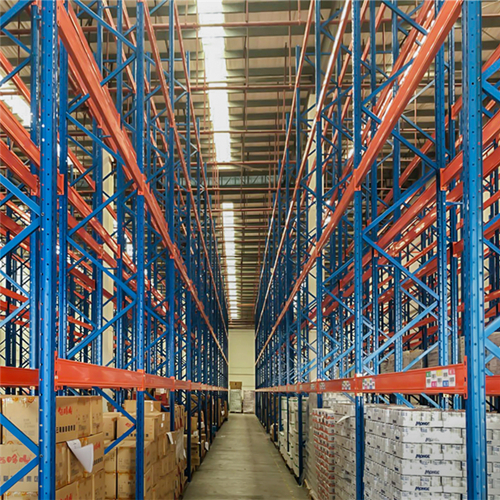
Through multi-layer design (usually 2-5 layers, with high-rise shelves reaching more than 10 layers), shelves can centrally store
goods vertically that were originally scattered on the ground. Under the same floor area, the storage capacity can be increased by 2-5 times.
For example, a 1,000-square-meter horizontal warehouse using 3-layer heavy-duty shelves can effectively expand its actual storage area
to over 3,000 square meters, equivalent to "gaining two additional warehouses out of thin air". This improvement in space utilization not only
reduces the cost of warehouse expansion or leasing new venues but also allows the existing warehouse to accommodate more SKUs,
making it particularly suitable for multi-category storage scenarios such as e-commerce and retail.
II. Optimizing Operational Processes for "Fast In and Fast Out" of Goods
In warehouses without shelves, goods are often stacked, requiring "rummaging and moving" during outbound operations,
which is not only time-consuming and labor-intensive but also prone to goods damage. The partitioned and layered storage design
of shelves enables warehousing operations to achieve "fixed storage locations and clear paths",
fundamentally improving turnover efficiency.
More Efficient Inbound: Goods are assigned exclusive storage locations according to category and specification,
allowing forklift operators or pickers to store them accurately directly without wasting time searching for empty spaces;
Faster Outbound: Combined with a WMS (Warehouse Management System), each storage location corresponds to a unique code.
Pickers can quickly locate goods by scanning the code, increasing picking efficiency by more than 40%;
Easier Inventory Checking: Goods are placed in layers for clear visibility. During inventory checks,
there is no need to move stacked goods, significantly reducing error rates and cutting inventory time in half.
III. Ensuring Goods Safety and Reducing Loss Costs
Stacked goods are prone to deformation due to pressure, dampness, and mold. Additionally, there is a high risk of collision and
falling during manual handling. Through scientific load-bearing design and isolation protection, shelves can ensure
goods safety in multiple ways:
Each layer of the shelf has a clear load-bearing capacity, and layered storage of goods avoids damage from pressure;
Reasonable spacing between shelves ensures good ventilation, reducing the probability of dampness and mold;
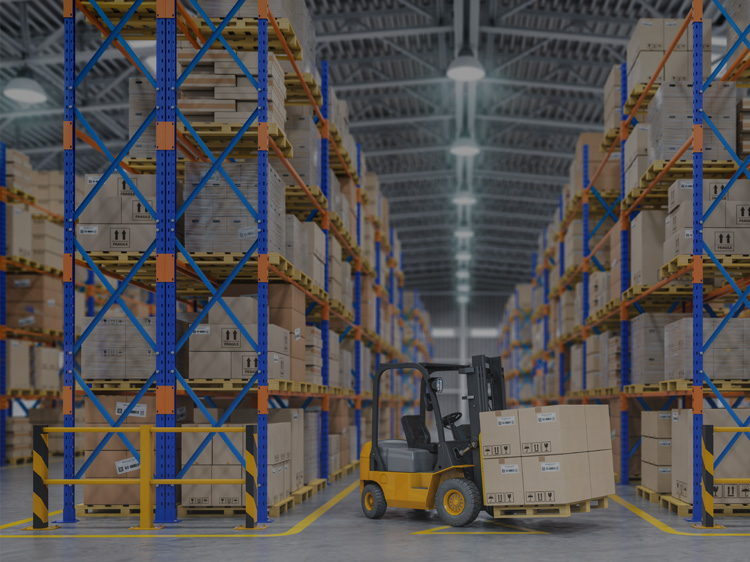
High-rise shelves work with forklifts and stackers to avoid collision risks during manual handling;
Some shelves are equipped with guardrails and baffles to prevent goods from sliding off, making them
especially suitable for storing fragile and valuable items.
Statistics show that the goods loss rate in warehouses using shelves can be reduced by more than 60%,
which can save enterprises considerable loss costs in the long run.
IV. Standardizing Warehousing Management and Enhancing Enterprise Operational Professionalism
Warehouses without shelves often face problems such as "disordered stacking of goods, unclear storage locations,
and inconsistencies between accounting books and physical goods", causing great troubles for management.
The application of shelves can promote the standardization of warehousing management:
Codified management of storage locations, where each product corresponds to a fixed location,
facilitating real-time inventory monitoring and traceability;
Classified storage of goods (e.g., partitioning by sales volume, category, and batch) to facilitate
FIFO (First-In-First-Out) management and reduce losses from expired or soon-to-expire goods;
Visualization of warehouse space allows managers to quickly grasp inventory status,
providing data support for procurement and sales decisions;
A neat and orderly warehouse environment not only improves operational efficiency
but also leaves a professional impression on customers, enhancing cooperation trust.
V. Adapting to Diverse Scenarios to Meet Different Warehousing Needs
Shelves come in a variety of types (such as heavy-duty shelves, medium-duty shelves, mezzanine shelves, shuttle shelves, etc.),
which can be flexibly adapted according to warehouse type, product characteristics, and operational mode:
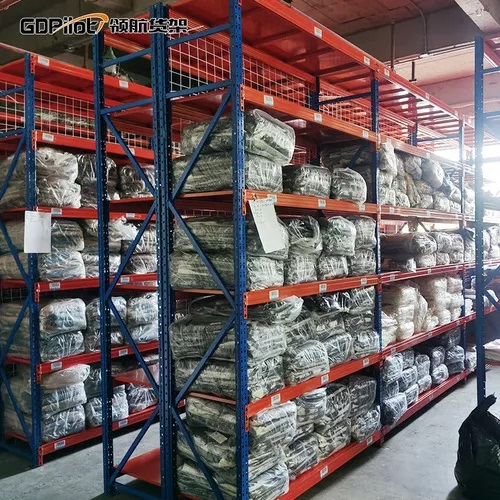
Heavy-duty shelves are suitable for large and heavy goods (such as mechanical equipment and building materials)
with a load-bearing capacity of up to several tons;
Mezzanine shelves use high-altitude space to build a second-floor storage area, suitable for light and small goods,
greatly improving space utilization;
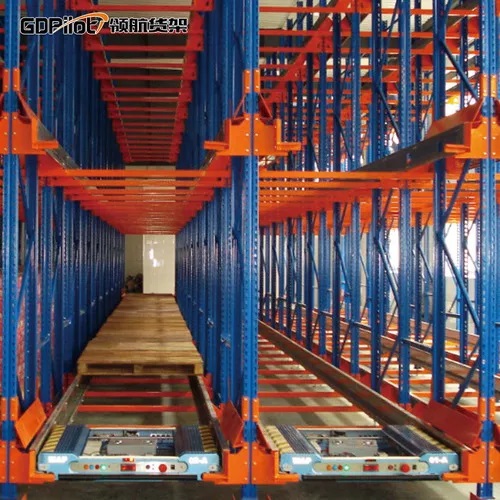
Shuttle shelves combined with automated equipment are suitable for high-throughput and high-density
storage scenarios (such as during e-commerce peak seasons);
Flow racks realize automatic sliding of goods, suitable for material supply next to production lines, improving production efficiency.
Whether you need to store heavy equipment or a large number of small commodities,
you can find a suitable shelf solution to make the most of warehouse space.
From space utilization to efficiency improvement, from goods safety to management standardization,
the benefits that shelves bring to warehouses run through the entire process of warehouse operations.
In the context of rising warehousing costs and increasingly fierce market competition, investing in a suitable shelf system is
not only an optimization of warehouse space but also an improvement in enterprise operational efficiency and profitability.
Choosing high-quality shelves and matching them with scientific warehousing management models can transform warehouses
from "spaces for storing goods" into "core logistics hubs of enterprises", providing solid warehousing support for enterprise development.