16 years of experience in the warehousing equipment industry
A comprehensive enterprise integrating research and development, production, sales, and installation

WE MAKE RACKING PROFESSIONAL
Specialize in heavy duty rack and mezzanine rack.
What Are the Benefits of Using Shelves in Warehouses?
In today's rapidly evolving logistics and warehousing industry, warehouses are no longer merely spaces
for stacking goods, but core nodes in an enterprise's supply chain that affect efficiency and costs.
As the "backbone" of warehousing systems, storage shelves are evolving from basic storage tools to key
drivers for enterprises to reduce costs, increase efficiency, and optimize management.
Whether it is a small e-commerce warehouse or a large industrial storage center, the scientific use of shelves
can unlock multiple values and inject new vitality into warehousing operations.
Three-Dimensional Expansion: Maximizing Limited Space
Space is the most valuable resource in the warehousing link, especially against the backdrop of rising warehouse rents
in core urban areas, making the space optimization capability of shelves particularly prominent. Traditional warehousing adopts
a "ground stacking" mode, where the stacking height of goods is usually no more than 2 meters. Goods at the bottom are
prone to damage from pressure, and the space utilization rate is generally less than 30%. In contrast, shelves can increase
space utilization to 60%-80% or even higher through vertical space development and scientific zoning.
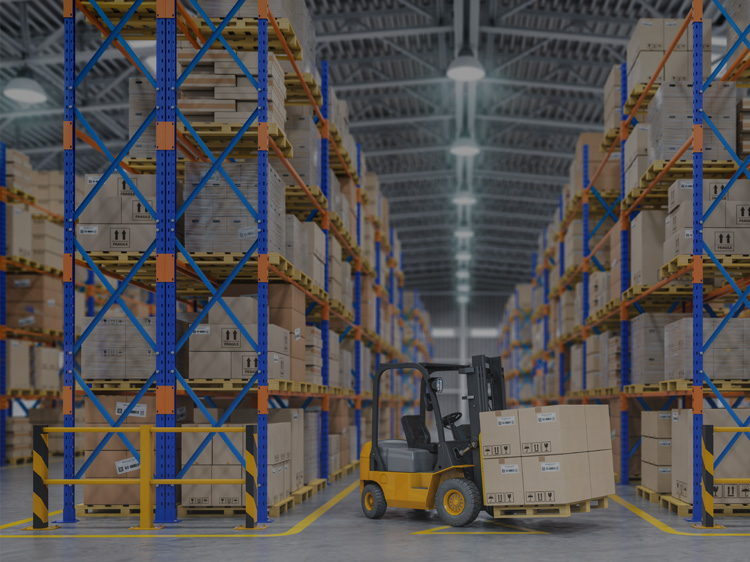
Different types of shelves adapt to different space needs: heavy-duty beam shelves can be built to a height of over 10 meters,
enabling high-altitude storage with the assistance of forklifts; mezzanine shelves double the storage area directly
by constructing double-layer or multi-layer structures, suitable for light and medium-sized long-cycle goods; narrow-aisle shelves
reduce the aisle width to 1.6-2 meters, increasing space utilization by an additional 20% compared with ordinary shelves,
making them the preferred choice for e-commerce warehouses. After replacing with shuttle shelves,
a 1,200-square-meter logistics warehouse increased its storage capacity from 960 pallets to 1,950 pallets,
with space utilization jumping from 40% to 82%. It no longer needs to rent temporary warehouses,
saving 180,000 yuan in annual rent.
Cost Reduction and Efficiency Improvement: Compressing Operating Costs in Three Dimensions
Labor, time, and goods loss costs in warehousing operations are important expenditures for enterprises.
Shelves achieve three-dimensional cost optimization through standardized management. In terms of labor costs, shelves,
combined with palletized storage and equipment such as forklifts and AGV robots, can reduce labor demand by more than 60%.
After using shelves, an e-commerce warehouse reduced its sorters from 12 to 5, saving 35,000 yuan in monthly labor costs.
In terms of time costs, shelves realize "zoned storage and label management" of goods. Pickers can quickly locate goods
through shelf numbers and layer numbers, improving efficiency by 3-5 times. In terms of goods loss, the loss rate of
traditional stacking is usually 5%-8%, while the layered isolation design of shelves avoids goods extrusion.
Equipped with moisture-proof laminates, anti-collision guardrails and other devices, it can significantly reduce losses.
After adopting heavy-duty shelves, a machinery manufacturing enterprise almost eliminated
losses caused by goods extrusion and falling.
Process Optimization: Adapting to Diverse Needs and Intelligent Upgrading
Modern warehousing has an increasingly urgent demand for "fast turnover and high accuracy". Shelves have become
the core carrier for efficiency improvement by flexibly adapting to storage strategies and automated equipment.
For goods with shelf life requirements such as food and medicine, flow racks can realize "first-in, first-out" (FIFO),
where goods slide out automatically without manual handling, minimizing the risk of expiration; for goods without
shelf life such as coal and building materials, heavy-duty shelves can adopt
the "last-in, first-out" (LIFO) mode to improve access efficiency.
More importantly, shelves lay the foundation for intelligent upgrading. Shelves in automated stereoscopic warehouses
are linked with stackers and WMS (Warehouse Management System) to realize the full-process automation of
goods warehousing, storage, picking, and outbound. Shuttle shelves paired with shuttle cars can achieve
automatic positioning, access, and inventory. The access time for a single batch of 50 pallets of goods is shortened
from 2 hours to 40 minutes, increasing the turnover efficiency of bulk goods by 40%.
Safety Assurance and Long-Term Adaptability: Consolidating the Foundation of Operations
Warehousing safety is the bottom line for enterprises. High-quality shelves build a dual safety barrier through scientific design.
Shelves are made of high-strength materials such as Q235 cold-rolled steel, with load-bearing capacity strictly tested.
Connection parts are equipped with anti-pull pins, beam locks, and other devices to prevent beam falling and goods dropping;
at the same time, zoned design separates storage areas from personnel and equipment channels to avoid collisions caused
by cross-operation. The height design adapted to ergonomics reduces the risk of personnel climbing.
From a long-term development perspective, the expandable and adjustable characteristics of shelves reserve space for
the growth of enterprise business. The height of laminates for light and medium-sized shelves can be flexibly adjusted,
and heavy-duty shelves adopt a fully assembled design, which can expand the number of layers and load-bearing capacity
by adding or reducing columns and beams. By adjusting the height of shelf laminates and increasing the number of groups,
a fast-moving consumer goods enterprise easily coped with the growth of product categories from 100 to 500,
saving more than 8 million yuan compared with building a new warehouse.
From space utilization to cost control, from efficiency improvement to safety assurance, the multiple advantages
of shelves comprehensively solve the pain points and difficulties of modern warehousing. With the accelerated development
of smart logistics, the in-depth integration of shelves with automation and digital technologies will further amplify their value,
provide solid support for the optimization of enterprise supply chains,
and help enterprises seize opportunities in the fierce market competition.